Learn Tagalog Fast Mobile
A five-day Design Sprint to help a language school double its monthly sales after its primary revenue channel, face-to-face lessons, was discontinued.
TL;DR
- Role
- Lead Interaction Designer, guided ideation of the key design decisions, built the hi-fi prototype with the team, ran validation; also the sprint's Recruiter
- Team
- 4 designers (Bee, Daniel, Joelle, Kim) + Learn Tagalog Fast's founder/CEO as sprint Expert
- Timeline
- 5-day Design Sprint, 2022
- Outcome
- A tested prototype with two new revenue-supporting experiences (Learner's Dashboard, Ask the Community) and a prioritized roadmap, handed off with recommendations. All three test tasks were completable in validation. No live metrics; the engagement ended at the sprint
The problem
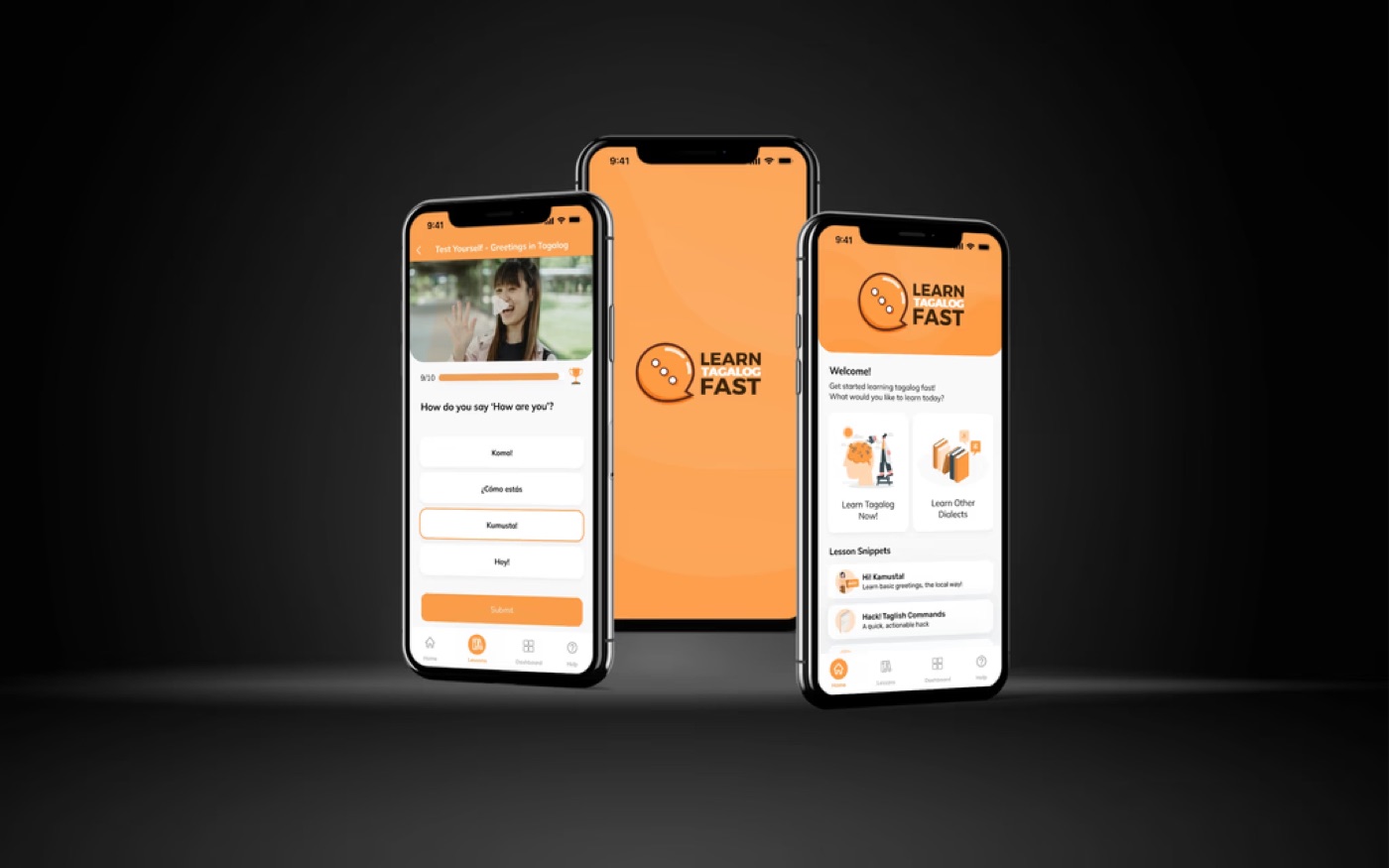
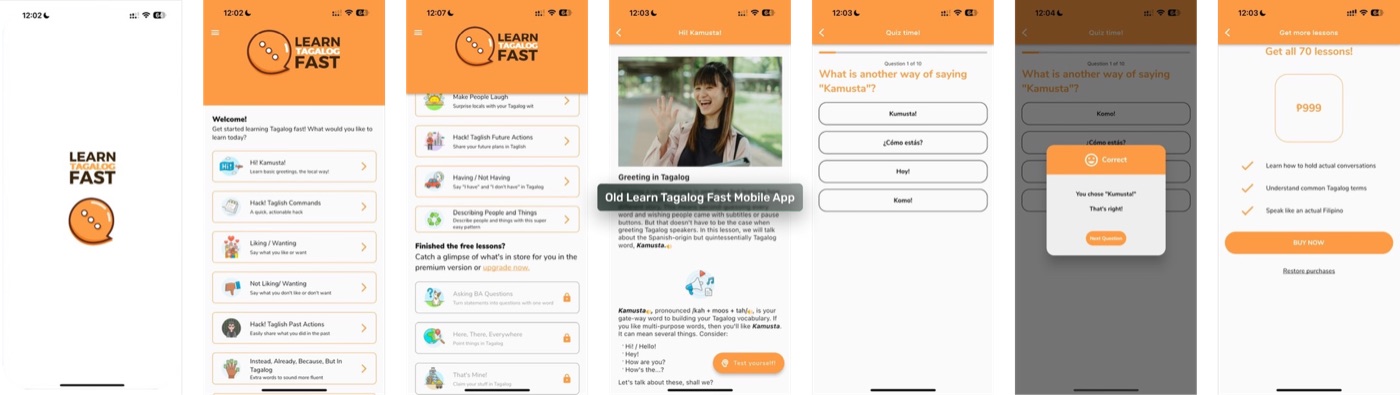
Learn Tagalog Fast had spent seven years teaching practical Tagalog to non-Tagalog speakers, with students from Home Credit, the European Union, and the US Army. From 2022, the face-to-face and video-call lessons were discontinued. Overnight, the mobile app went from companion product to the entire business.
The client's ask was blunt: double monthly sales on app-only, self-paced learning, without touching the existing branding. The real design question underneath it: what makes a self-paced app worth paying for, when the thing customers had been paying for was a human teacher?
Business goal: double monthly sales. App-only, self-paced, existing branding kept.
Constraint: five days, problem to tested prototype.
My role
I led interaction design in a four-designer sprint team, guiding the ideation that produced the key design decisions and building the hi-fi prototype alongside the team. I also took the Recruiter role, sourcing and scheduling our three test participants across time zones. The client's founder/CEO, Phil Smithson, sat in the sprint as our Expert.
Five days from kickoff to validated prototype, 2022.
The workshop: design sprint
Why a sprint, not a project
A revenue problem this open-ended can absorb months of discovery. The client didn't have months; their income channel was already gone. A Design Sprint forced one bet, prototyped and tested inside the week. We assigned the five sprint roles (Facilitator, Expert, Decider, Recruiter, Interviewer) on day zero so no decision could stall waiting for consensus.
Day 1: know the unknowns
Betting on the moment users decide to pay
We anchored on a persona worth designing for: Oliver Lopez, 24, a Filipino-American freelance designer in San Diego who wants to reconnect with his heritage and speak with his elderly family, but is embarrassed to practice. That embarrassment turned out to be load-bearing; it shaped the biggest feature we shipped on day four.
Oliver Lopez
A “how” learner
24 · Filipino-American · Freelance designer · San Diego, CA
Wants
- Reconnect with his cultural heritage
- Speak Tagalog with the elderly family members who don't speak English
Tagalog experience
- Was never taught Tagalog by his parents
- Picked up words from his surroundings and media
- Took classes but didn't retain them
- Has tried language-learning apps
- Avoids practicing at home, embarrassed to get it wrong
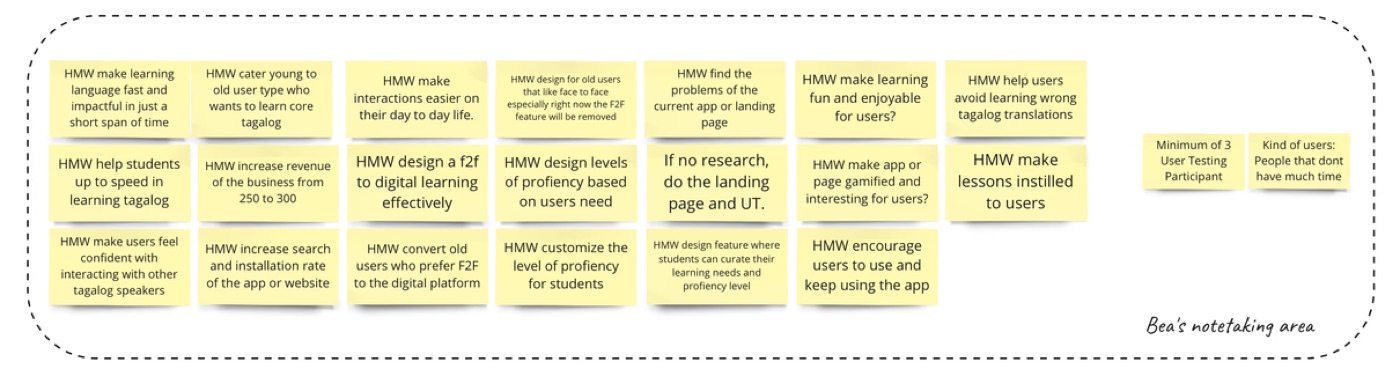
An expert interview with the founder filled in the business side, and a ~20-note How-Might-We board was voted down to six themes: make the app genuinely interesting, teach conversational Tagalog, quick translation, build confidence, replace face-to-face lessons, and curate lessons by proficiency.
The client's own two-year ambition set the ceiling:
“In 2 years, LTF (Learn Tagalog Fast) will branch out to other Filipino dialects (Bisaya, Ilonggo, Ilocano…)”
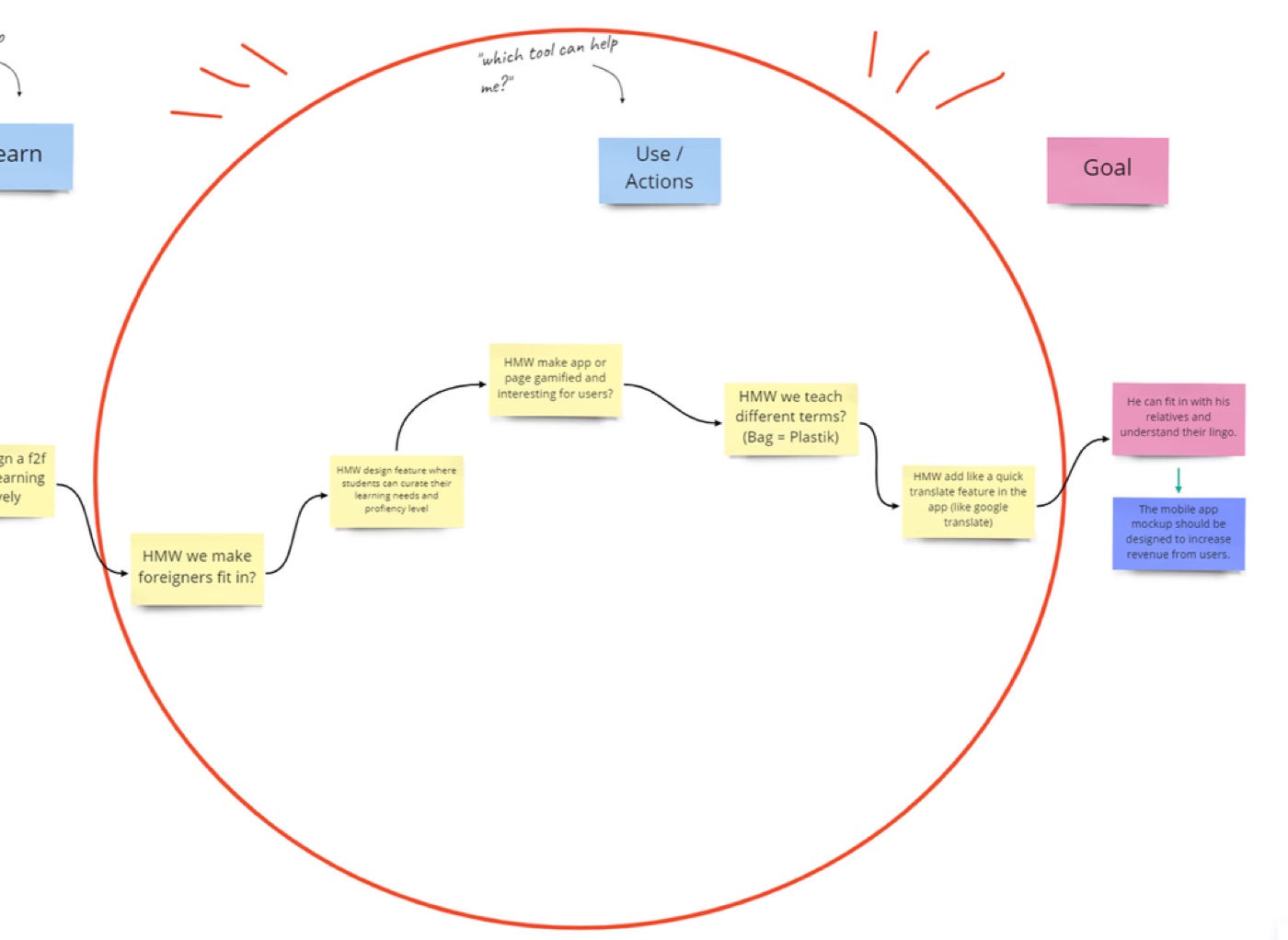
Mapping the journey from Discover to Learn to Use to Goal, we made the sprint's first real decision: focus on the Use stage. That's where a learner decides a subscription is worth it, and where the revenue goal would be won or lost. Our sprint questions followed: can we make the experience enjoyable, can it scale to other dialects, and is it more effective than a book?
Day 2: gathering inspirations
Steal the category's best patterns, place the paywall honestly
Lightning demos of Duolingo, Memrise, StoryLearning, Michel Thomas, and DeepL gave us the category's proven mechanics. Four rounds of individual ideation (note-taking, doodling, Crazy 8s, solution sketches) and dot-voting then produced the concept we'd commit to.

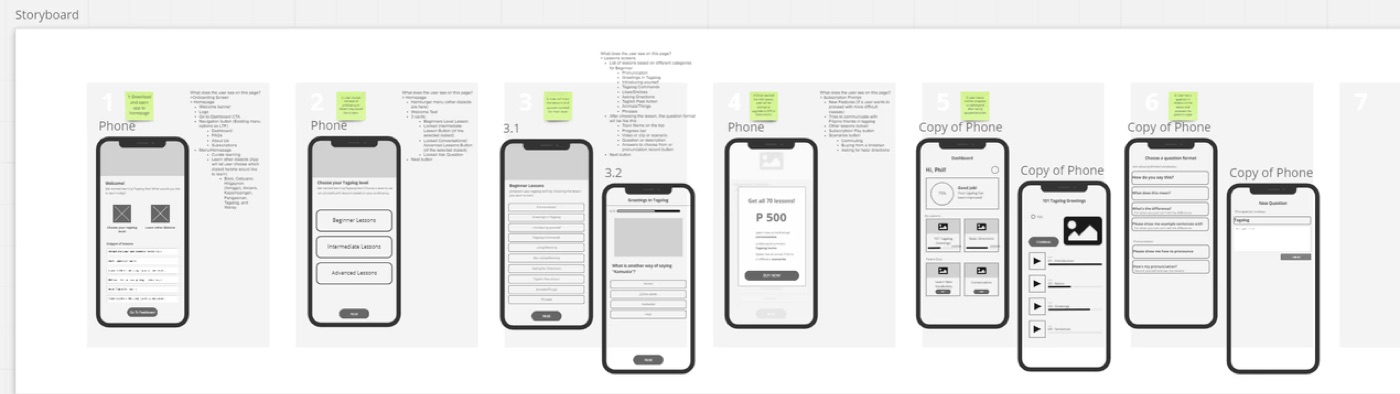
The winning flow made one deliberate monetization call: let learners feel the value before asking them to pay. Six steps, paywall at the tenth lesson:
- Download the app
- Choose proficiency and dialect
- Work through lessons and quizzes
- Hit the paywall at the 10th lesson: one-time purchase or subscription
- Track progress on the dashboard
- Ask a question on the community page

Day 3: workshop day
Day 3 turned this into lo-fi storyboards with a feature list per screen. We finished ahead of schedule, which bought us prototyping time.
Day 4: turning it into life
A hi-fi prototype in ninety minutes
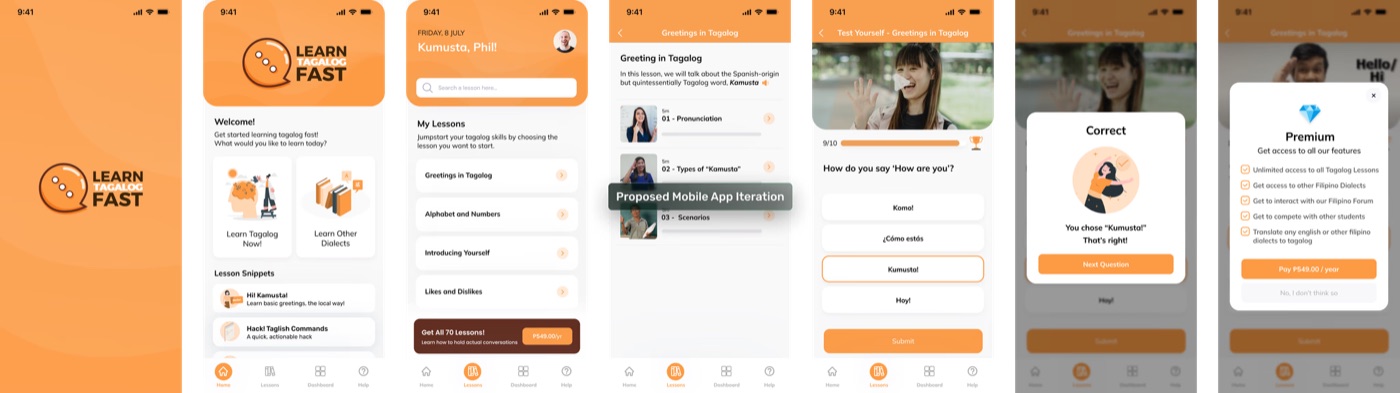
With the storyboard tight, four designers built the hi-fi Figma prototype in about 1.5 hours, working in parallel. Two new experiences carried the revenue thesis:
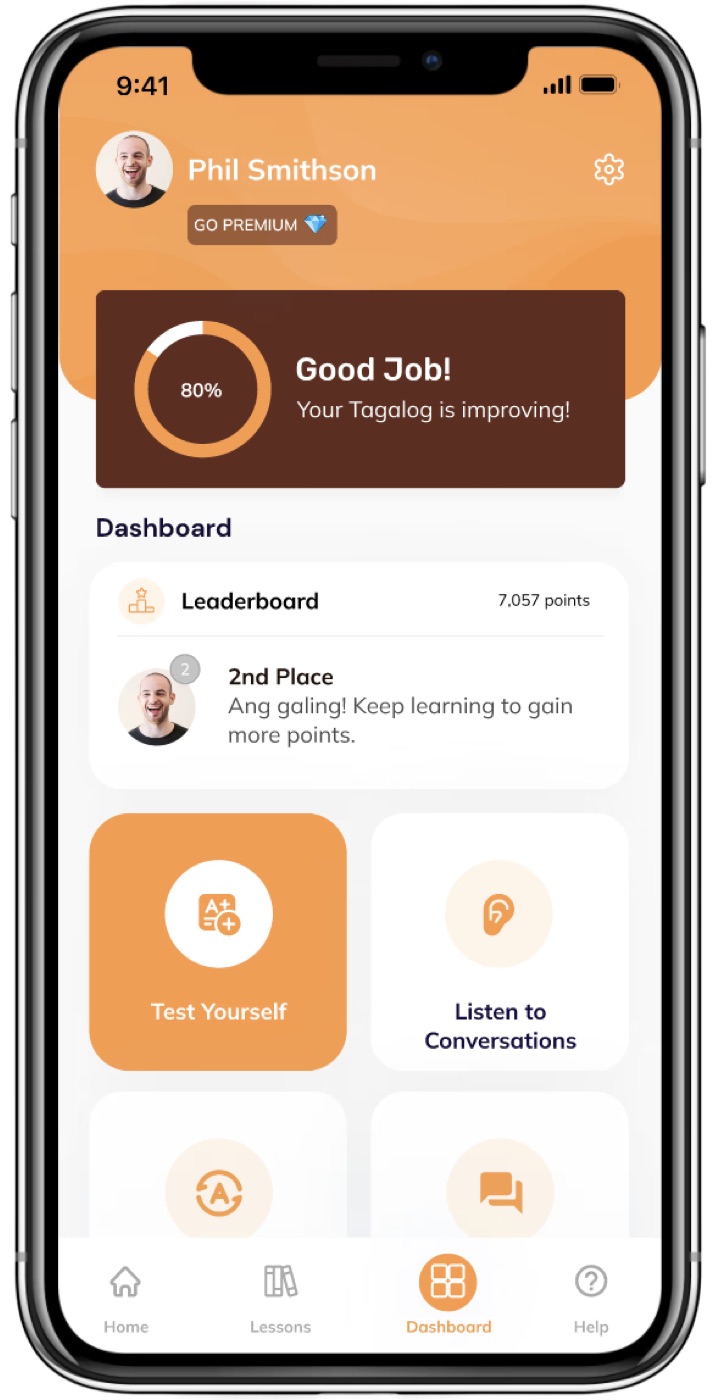
Learner's Dashboard
Progress made visible and gamified, with a leaderboard and deliberately fewer options on screen. Self-paced learning fails without anyone noticing; the dashboard is what a learner comes back to.
Ask the Community
A Q&A space with teachers and co-learners: replies can carry pronunciation audio, and answers can be saved or replied to directly. This was the direct answer to both problems at once, the discontinued lessons and Oliver's embarrassment. Practice with people, without a classroom.
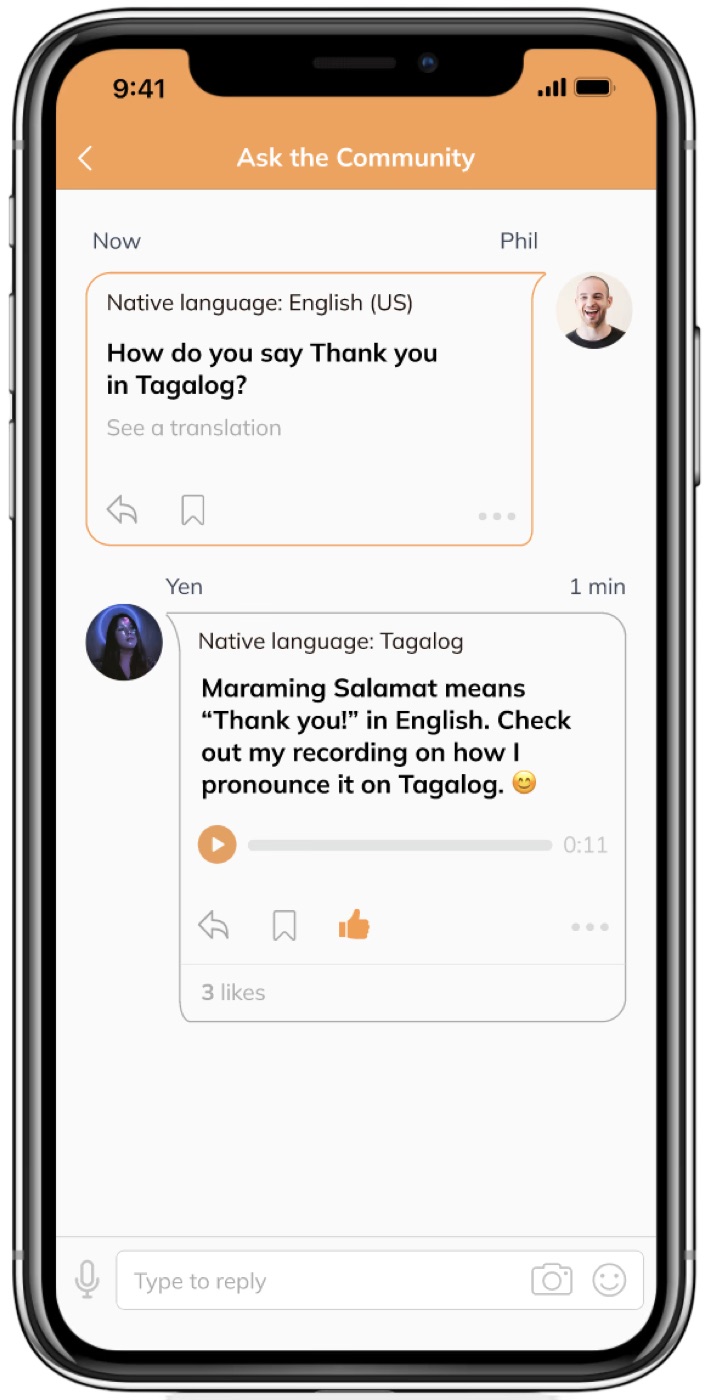
We rounded the prototype out with onboarding and sign-in/sign-up so testers would experience the flow end to end, not screen by screen.
Day 5: testing
Three testers, three tasks
I recruited three participants (Prima Patrianto, Jed Santos, and Alliyah Zoobi, ages 23–37) testing from different countries over Google Meet. Each ran the same three tasks against the prototype:
- Find your first lesson
- Take the test and complete the free lessons
- Subscribe and find Ask the Community
Participants demographics
3
Participants
3
Regions
23–37
Age range
- Alliyah ZoobiAfrica
- Jed SantosSoutheast Asia
- Prima PatriantoOceania
Three testers from three parts of the world, all aged 23 to 37.
Likes
“It's pretty cool that you can ask the community when something isn't in the app.”
· Alliyah
“Video would really help during lessons, especially for pronunciation.”
· Jed
“It would be great if the app taught Bisaya too.”
· Alliyah
Suggestions
“The leaderboard needs more clarity. It's odd, but I'm a fan of leaderboards.”
· Jed
“Highlight the gated features, not the subscription price.”
· Jed
“I'd like to see my lesson history so I can pick up where I left off.”
· Prima
The flow held (all three tasks were completable) and the suggestions were specific enough to act on:
- The leaderboard needed explaining. Gamification only motivates when the rules are legible.
- The paywall should sell the gated features, not the price. Lead with what you unlock.
- Learners wanted a lesson history, evidence of progress they could look back on.
- One tester asked for Bisaya, unprompted, validating the client's two-year dialect ambition before the client had built toward it.
Where it stands
The engagement was the sprint: we handed off the tested prototype with a prioritized set of recommendations (customizable notifications, leaderboard and gamification refinement, Taglish/Tagalog options, scenario-based lessons, extending to other dialects). There are no live metrics to report and no client updates since; a five-day engagement ends at hand-off. What the client got was a validated direction and a testable monetization model, not a shipped release. That's what five days can honestly buy.
In hindsight
What this project taught me
A sprint gives you no room to be precious. I recruited testers, led ideation, and built screens in the same week, whichever the day needed. But the lasting lesson was thinking like an owner: the useful question was never “is this good design?” It was “would Oliver still be paying in month two?” When you're handed someone's entire remaining revenue channel, that's the only question that matters.
Next project
2026 · Web